Why Price Always Follows Liquidity
Price doesn't move randomly — it's drawn to liquidity like gravity. The mechanics behind why price targets stop clusters and how to trade it.

Watch any market long enough and a pattern becomes undeniable: price is drawn to where the orders are. Swing highs get taken out. Swing lows get swept. Session levels get tested. Round numbers get hit.
This isn't random. Price follows liquidity because the market can't function without it. Understanding this principle is arguably the single most important insight in Smart Money trading.
Why Does Price Follow Liquidity?
Markets exist for one purpose: to facilitate transactions. For a transaction to occur, there must be a buyer and a seller at the same price.
When a large institution needs to execute a massive order, they need a counter-party of equal size. They can't create this counter-party - they can only go where one already exists.
Where does this counter-party exist? At liquidity pools - clusters of resting orders at predictable price levels.
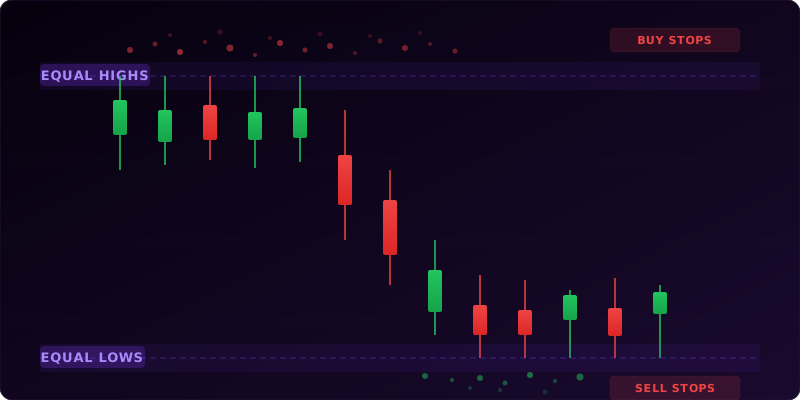
Price moves toward these pools because the institutions that drive the market need the orders sitting there. It doesn't go where it "should" go based on a pattern. It goes where the orders are.
How Do Liquidity Mechanics Work?
Step 1: Orders Accumulate
As price trades in a range, traders place orders:
- Stops above swing highs and below swing lows
- Limit orders at perceived support and resistance
- Take-profit orders at structural levels
- The longer the range holds, the more orders accumulate
Step 2: Institutions Identify the Pools
Institutional traders have access to order flow data from their venues and can infer where the largest concentrations likely sit based on visible price structure and historical patterns. They plan their execution around these expected pools.
Step 3: Price Is Drawn to the Pool
The institution begins positioning. This pushes price toward the cluster. Other traders see the move and add momentum (breakout traders, momentum followers).
Step 4: The Pool Gets Triggered
Price reaches the level. The resting orders trigger:
- Stop-losses execute (providing counter-party orders)
- Breakout orders execute (providing additional counter-parties)
- The institution fills their position against these triggered orders
Step 5: Price Reverses or Continues
Once the orders are absorbed:
- If the institution's position is filled → price reverses in their intended direction
- If more fills are needed → price continues to the next pool
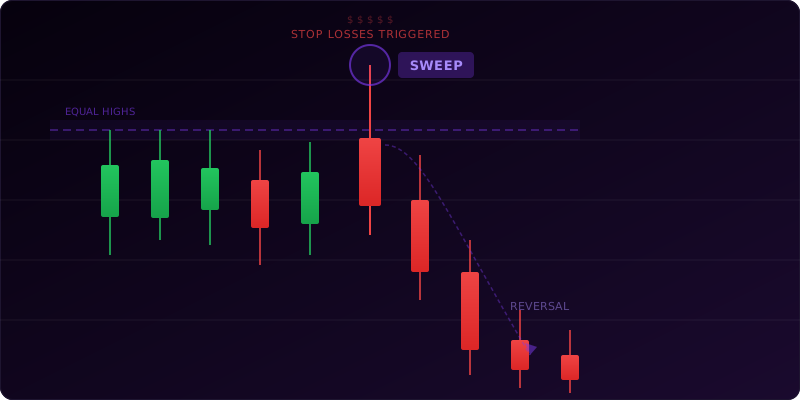
This explains the common pattern of a high being swept, price reversing, then targeting a low - the institution swept buy-side orders to fill sells, then sells push price toward sell-side flow.
What Evidence Appears on Your Chart?
Equal Highs Get Taken
When price makes two or three highs at the same level, it's advertising where stops sit. These equal highs almost always get swept eventually. The stop cluster is too obvious for institutions to ignore.
Session Levels Get Tested
Previous day highs and lows are among the most significant liquidity points. Watch how often price sweeps a PDH or PDL early in the next session - it's institutional positioning.
Ranges Break Both Ways
In a consolidation range, both the high and low will typically get swept before a genuine directional move occurs. Price targets the resting orders above, then the orders below (or vice versa), then moves directionally once enough positions are filled.
"Fake" Breakouts Are Real Sweeps
What traditional technical analysis calls a "fake breakout" is actually a liquidity sweep. Price breaks above resistance, triggering buy orders and stops, then reverses. It wasn't fake - it accomplished exactly what it was designed to: trigger the resting orders.
GrandAlgo
See these concepts automated on your charts
18 TradingView indicators — smart money, price action, supply/demand, and more.
How to Trade the Liquidity Principle
1. Identify Where Liquidity Sits
Before each trading session, mark:
- Previous day high and low
- Previous week high and low
- Session highs and lows (Asia, London, NY)
- Obvious swing highs and lows
- Equal highs and equal lows
These are your liquidity targets - where price is likely to go.
2. Anticipate, Don't Chase
Instead of buying the breakout above a swing high, wait for the sweep and reversal:
- Price sweeps above the level (triggers buy-side orders)
- A reversal candle or structure shift occurs (institutions have filled)
- Enter in the reversal direction (short, in this case)
3. Use Liquidity for Targets
If you're in a long trade, the next swing high or session high is your potential target - price is drawn to the resting orders there. If you're short, the next swing low or session low.
4. Place Stops Beyond the Liquidity
Don't place your stop at the same level everyone else does. Place it beyond the stop cluster - a few ticks past the obvious swing point. This way, a sweep that targets the pool doesn't take your stop.
How Does Liquidity Connect to Other SMC Concepts?
Liquidity → FVG
After a liquidity sweep, the aggressive reversal often creates a fair value gap. This FVG becomes your entry zone when price retests it.
Liquidity → CISD
The sweep triggers a Change in State of Delivery (CISD) - the moment when order flow shifts direction. The CISD supports the read that the sweep led to a genuine directional shift.
Liquidity → Market Structure
A sweep often coincides with a Change of Character (ChoCh) - the first structural break against the prevailing trend, signaling a reversal.
The Complete Setup
Liquidity sweep → CISD/ChoCh → FVG formation → FVG retest = full Smart Money entry
What Are Common Liquidity Misconceptions?
"Price targets liquidity then reverses" - Not always. Sometimes price grabs the pool and continues. This happens when:
- More resting orders exist in the same direction
- The institution needs more fills than the pool provided
- The sweep is part of a genuine trend move, not a reversal
How to tell the difference: Look for reversal confirmation (structure shift, FVG formation) after the sweep. Without confirmation, the sweep might be continuation. A liquidity heatmap can help you visualize where historical volume has concentrated at nearby levels.
"All pools are equal" - No. Higher timeframe stop clusters (weekly highs/lows) are more significant than lower timeframe (5-minute swing points). The size of the resting pool influences the size of the reaction.
Frequently Asked Questions
Price follows liquidity because markets need orders to transact. Stop clusters and breakout orders give large players the counterparties they need.
Liquidity builds above swing highs, below swing lows, around equal highs or lows, at range extremes, round numbers, and session highs or lows.
No. Price can reverse after a sweep or continue through the level if the liquidity grab supports a larger breakout or trend move.
They identify obvious pools of stops or breakout orders and use those pools as likely draw points or partial take-profit areas.
Avoid placing stops exactly where everyone else does. Put invalidation beyond the structure that would prove the trade idea wrong.
Key Takeaways
- Price follows liquidity because institutions need counter-parties to fill large orders
- Liquidity clusters at predictable levels: swing points, session levels, equal highs/lows, round numbers
- The market cycle is build, sweep, displace, repeat
- "Fake breakouts" are real liquidity sweeps - they accomplish exactly what they're designed to
- Trade with the sweep, not against it - wait for the reversal after the sweep, don't buy the breakout
- Use these levels as targets for your existing trades
- Place stops beyond obvious liquidity pools, not at them
- After a sweep, look for FVG + structure shift confirmation before entering


