CRT with Key Levels: Complete Setup Guide
CRT with Key Levels identifies Candle Range Theory setups -patterns where price briefly sweeps beyond a prior candle's high or low before reversing back, trapping traders on the wrong side. The indicator filters these patterns for confluence with key institutional levels: Previous Day High/Low, Previous Week High/Low, or Fair Value Gaps.
In CRT, a key level is an institutional reference point like PDH/PDL, PWH/PWL, or a fair value gap. A CRT setup becomes higher probability when the sweep happens at one of these levels and price closes back inside the prior candle range, showing a failed breakout and stop-run reversal.
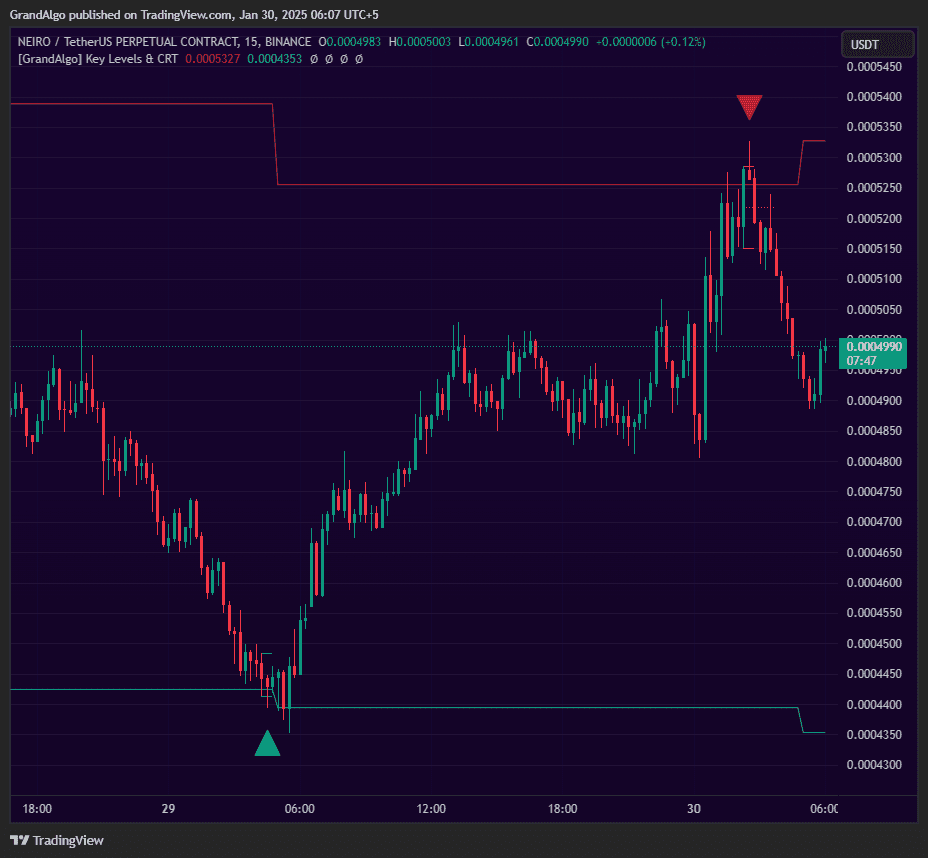
What It Does
When a CRT pattern occurs at a key level, it draws the candle range with a midpoint level and places a directional triangle signal. The result is a precise system that catches institutional liquidity grabs at the levels that institutional traders are watching.
Key Features
Candle Range Theory Detection
Identifies candles that sweep beyond the prior candle's high or low then reverse back -the classic institutional liquidity grab pattern.
Three Key Level Modes
Filter CRT signals by Previous Day High/Low, Previous Week High/Low, or Fair Value Gaps for institutional confluence.
Range & Midpoint Plotting
Draws the CRT candle's high, low, and midpoint as horizontal levels that serve as targets and entry zones.
Directional Signals
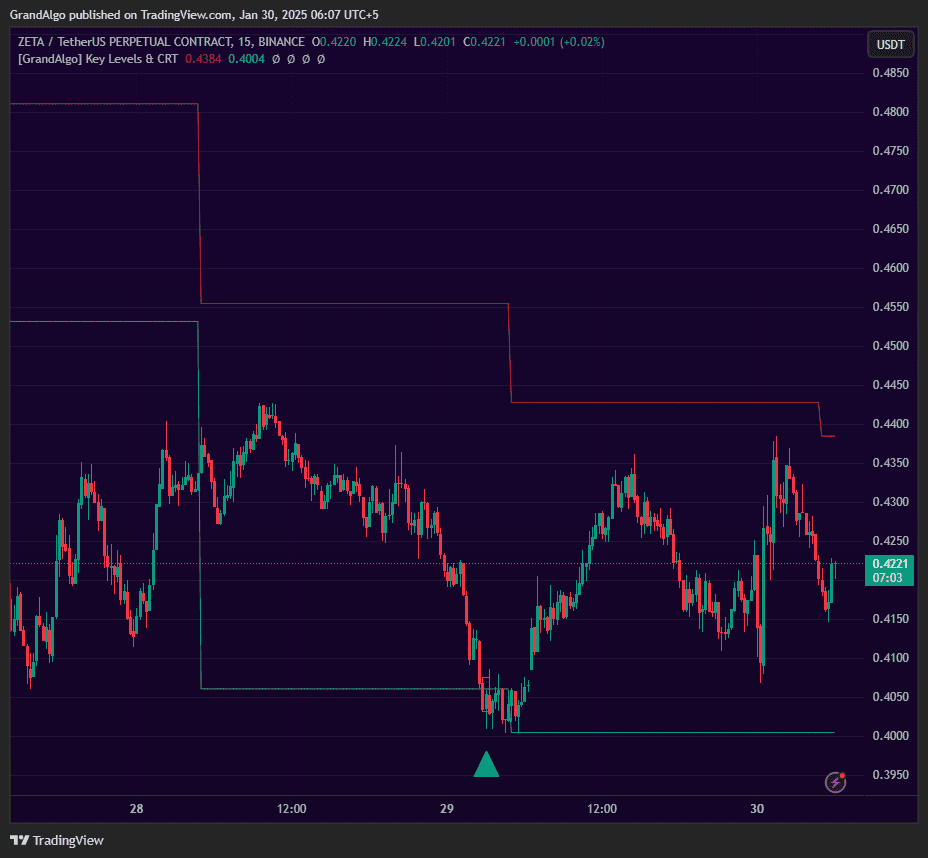
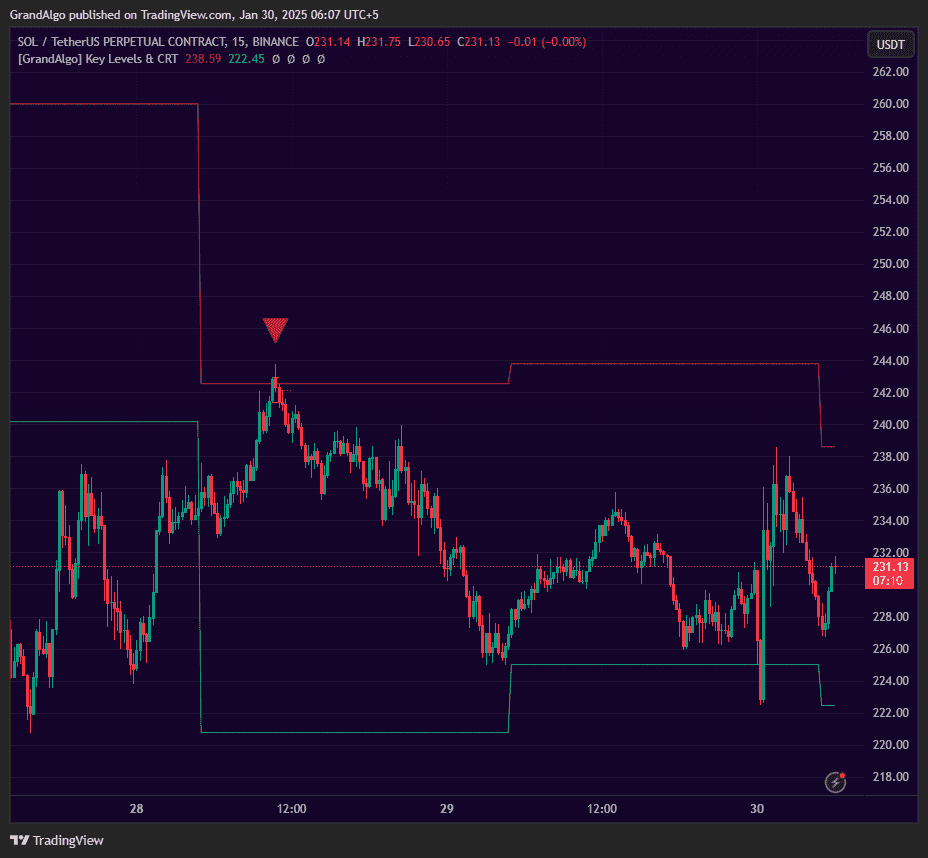
Clear triangle markers for bullish CRTs at key lows and bearish CRTs at key highs, with built-in alert conditions.
In Action
CRT with Key Levels applied across different markets.
Settings & Parameters
Key settings you can configure in TradingView.
| Parameter | Type | Default | Description |
|---|---|---|---|
| Show Only Trade Setup CRT | bool | true | When enabled, only shows CRT patterns that occur at key levels. Disable to see all CRT patterns regardless of level confluence. |
| Key Level Mode | string | PDH/PDL | Choose which institutional levels to filter by: Previous Day High/Low, Previous Week High/Low, or Fair Value Gaps. |
| Max FVG Lookback | int | 3 | When using FVG mode, how many bars back to search for a qualifying Fair Value Gap. |
How to Use It
Choose Your Key Level Mode
PDH/PDL (Previous Day High/Low) is the most popular mode for day traders. PWH/PWL works well for swing traders. FVG mode finds CRT patterns at Fair Value Gap levels for precision entries.
Identify the CRT Pattern
Look for candles that sweep beyond the prior candle's range then close back inside. This represents a failed breakout where stops were hunted before a reversal.
Use the Midpoint Level
The midpoint line drawn within the CRT range serves as an immediate target for the reversal trade. It represents the equilibrium of the CRT candle's range.
Follow the Triangle Direction
Bullish triangles appear at swept lows (long entries), bearish triangles appear at swept highs (short entries). The triangle direction is your trade direction.
Best Practices
Keep Trade Setup Filter Enabled
CRT patterns without key level confluence are less reliable. The filter ensures every signal has institutional level backing.
Best on Lower Timeframes
CRT patterns are most effective on 1-minute to 15-minute charts where the liquidity sweep and reversal happen quickly within a few candles.
Use the Range as Risk Definition
The CRT candle's full range provides a natural stop-loss placement. If price breaks beyond the sweep high/low, the pattern has failed.
Related Indicators
Related Articles
Frequently Asked Questions
Frequently Asked Questions
A CRT key level is a reference level institutions watch for liquidity: Previous Day High/Low (PDH/PDL), Previous Week High/Low (PWH/PWL), or a Fair Value Gap. CRT signals are strongest when the sweep happens at one of these levels instead of in random mid-range noise.
Use PDH/PDL for day trading and intraday scalping. Use PWH/PWL for swing context. Use FVG mode when you already trade imbalance-based entries and want CRT sweeps to align with a gap fill/rebalance area.
A simple risk model is: stop beyond the sweep extreme (the CRT candle high/low), and first target at the midpoint of the range. If the midpoint breaks cleanly, the opposite side of the range is a logical next target.
The CRT signal is only confirmed after the candle closes back inside the prior candle range at a valid key level. Once a setup is confirmed and drawn, it does not move retroactively.
Ready to Start Trading?
Get access to CRT with Key Levels alongside all 18 premium indicators.