Skip to content
HomeIndicatorsSmart Money ConceptsReversal Market Structure
Smart Money Concepts

Reversal Market Structure

Detects complete market structure reversal patterns by analyzing sequences of structure breaks, with optional FVG confluence filtering.

Sensitivity

3 levels

Markets

All

Style

Overlay

Alerts

Built-in

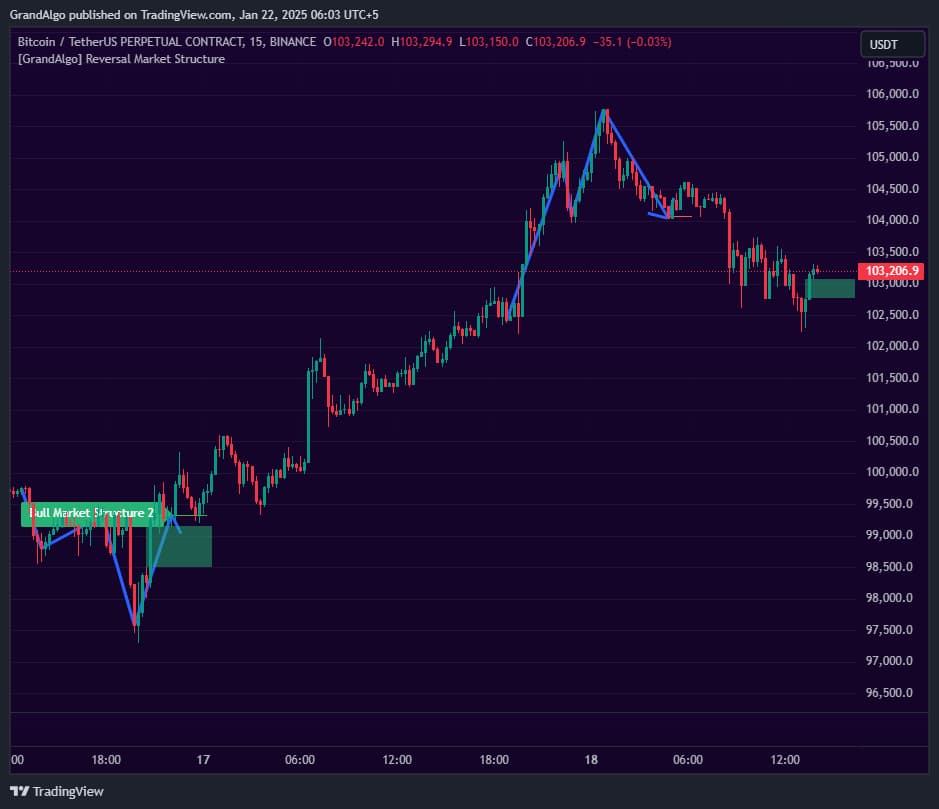
Reversal Market Structure TradingView indicator on BTCUSDT chart
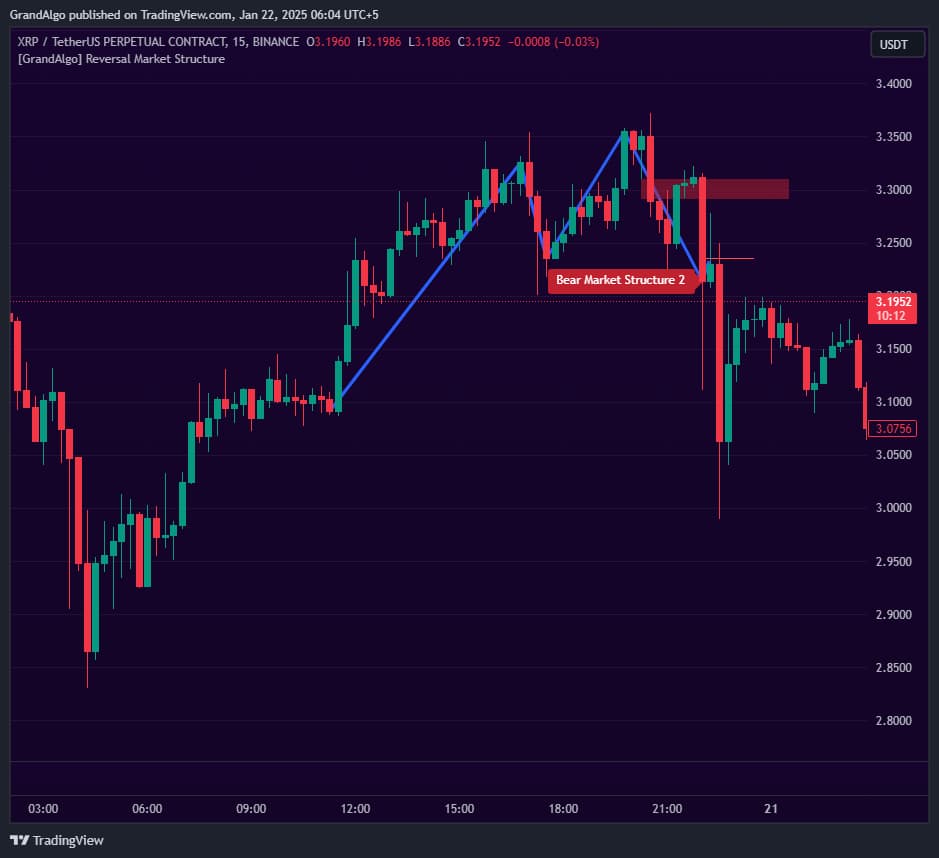
Reversal Market Structure TradingView indicator on XRPUSDT chart
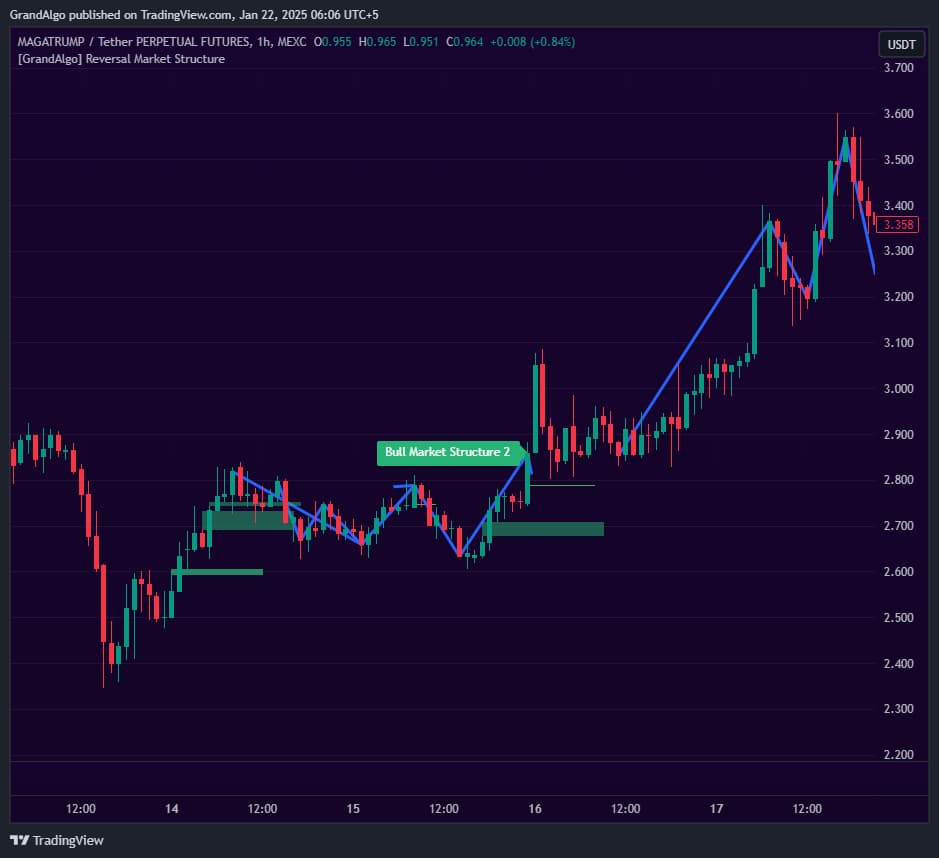
Reversal Market Structure TradingView indicator on TRUMPUSDT chart
1 / 3

Overview

Reversal Market Structure goes beyond marking individual Break of Structure points. It waits for a confirmed reversal pattern -a complete sequence of structure breaks that signals the trend is genuinely changing direction. The indicator traces the full swing path through the key price points and draws it as a multi-segment zigzag with a directional arrow at the confirmation break. By default, reversals are only displayed when a Fair Value Gap exists within the reversal structure, adding an extra layer of institutional confluence. Three sensitivity levels and two swing detection methods let you tune it to your trading style.

How It Works

Reversal Market Structure tracks the sequence of Break of Structure (BoS) and Change of Character (ChoCh) events to identify when the market has completed a full reversal pattern -- not just a single structure break. The algorithm monitors swing highs and lows using configurable pivot detection with two methods: Close-based (which uses closing prices for swing identification) and High/Low-based (which uses absolute price extremes).

For a bullish reversal to be confirmed, the indicator requires a sequence where two consecutive bearish structure breaks (establishing a downtrend) are followed by a ChoCh that reclaims the most recent lower high, and then price breaks above the swing high formed after the second bearish BoS. The full swing path through these key points is drawn as a multi-segment zigzag with a directional arrow at the confirmation break. Bearish reversals follow the mirror logic.

By default, the FVG confluence filter is enabled, meaning reversals are only displayed when a Fair Value Gap exists within the reversal structure. This ensures that every marked reversal contains an institutional imbalance -- a gap left by aggressive order flow -- adding a layer of confluence that filters out weaker structure shifts. Three sensitivity levels (Minor, Intermediate, Major) control the swing detection lookback, letting you tune the indicator for anything from intraday scalping to swing trading.

Key Features

01

Complete Reversal Detection

Identifies confirmed reversal patterns requiring a full sequence of structure breaks -not just individual BoS/ChoCh marks.

02

FVG Confluence Filter

By default, only shows reversals that contain a Fair Value Gap within the structure -adding institutional confluence to every signal.

03

Zigzag Visualization

Draws the full reversal path as a multi-segment zigzag connecting the key swing points with a directional arrow at the confirmation break.

04

Two Swing Detection Methods

Choose Close-based swing detection for precise structure analysis or High/Low-based for wider swing identification.

Common Trading Setups

Practical ways to trade with Reversal Market Structure.

01

Reversal Confirmation Entry

Enter at the confirmation point of a complete reversal pattern, where the trend has fully shifted direction with structural proof.

  1. 1Wait for the indicator to draw a complete reversal zigzag with an arrow label (Bull or Bear Market Structure).
  2. 2Identify the Fair Value Gap drawn within the reversal structure (if the FVG filter is enabled).
  3. 3Enter in the reversal direction on the confirmation candle or on a pullback to the FVG zone.
  4. 4Place your stop-loss beyond the lowest swing point in a bullish reversal (or highest in a bearish reversal).
  5. 5Target the origin of the previous trend leg or the next significant structure level.
02

FVG Retest Within Reversal Structure

After a reversal is confirmed, price often retraces to fill the Fair Value Gap within the structure before continuing in the new direction.

  1. 1After a reversal signal fires, mark the FVG zone that was drawn within the reversal structure.
  2. 2Wait for price to retrace back into the FVG zone.
  3. 3Enter when price shows rejection at the FVG boundary (wick rejection, engulfing pattern).
  4. 4Place your stop-loss beyond the opposite edge of the FVG.
  5. 5Target the swing high/low that the reversal arrow pointed toward.

Settings Reference

Key settings you can configure in TradingView. See the full setup guide for detailed walkthroughs.

ParameterTypeDefaultDescription
LengthstringMinorThree sensitivity levels: Major for significant reversals only, Intermediate for moderate sensitivity, Minor for catching more reversal patterns.
Swing TypestringCloseMethod for identifying swing points: Close uses closing prices for precise structure, High/Low uses wicks for wider swing detection.
Show FVG Only StructurebooltrueWhen enabled, only shows reversals containing a Fair Value Gap within the structure for higher-quality signals.
Draw FVGbooltrueDraws the Fair Value Gap within the reversal structure when one is present.
Compact LabelsbooltrueUses compact label formatting to reduce visual clutter on the chart.

Pro Tips

Use Close-Based Swing Detection

Close-based detection (default) produces more precise structure analysis because closing prices represent committed market opinions rather than momentary wick spikes.

Trade in the Direction of the Reversal

Once a reversal is confirmed, look for entries in the new trend direction. The FVG within the structure provides the ideal entry zone.

Combine with Higher Timeframe Trend

Reversals that align with the higher timeframe trend direction are more reliable. A bullish reversal on the 1H chart while the Daily is also bullish is a stronger signal.

Frequently Asked Questions

Standard BoS/ChoCh indicators mark individual structure break events in isolation. Reversal Market Structure waits for a complete sequence -- multiple structure breaks that confirm a genuine trend reversal. A single ChoCh can be a false signal, but a full reversal sequence (two bearish BoS events followed by a bullish ChoCh and confirmation break, or vice versa) provides much higher-probability reversal identification.

When enabled (the default), the indicator only displays reversal patterns that contain a Fair Value Gap somewhere within the swing structure. This filters out reversals formed purely from candle closes and keeps only those with an institutional imbalance signature. Disabling this toggle shows all qualifying reversal patterns regardless of FVG presence, which increases signal frequency but may reduce average quality.

Close-based detection identifies swing points using closing prices, which tends to produce more precise and selective structure identification since wicks are ignored. High/Low-based detection uses the absolute high and low of each candle, which casts a wider net and captures more swing points. Close-based is generally preferred for cleaner signals on volatile instruments, while High/Low works well on smoother trending markets.

Minor (3-bar lookback) detects smaller swings and works best on lower timeframes (1m-15m) for intraday reversals. Intermediate (5-bar) is a balanced setting for 15m-4H charts. Major (10-bar) detects only significant swing points and is suited for 4H-Daily charts where you want to catch major trend reversals. Start with Minor on lower timeframes and Intermediate on higher timeframes.

Get access to Reversal Market Structure

Included with every subscription plan alongside all 18 premium indicators. Subscribe today for just $19/mo.

Get StartedStarting at $19/mo