Breaker Blocks vs Order Blocks: Key Differences
Order blocks and breaker blocks look similar but serve different purposes. How each forms, when to use them, and why breaker blocks can be more powerful.

If you understand order blocks, breaker blocks are the natural next step. They're closely related - in fact, a breaker block starts as an order block - but they represent a different market dynamic and often produce even higher-probability setups.
What Is the Quick Recap on Order Blocks?
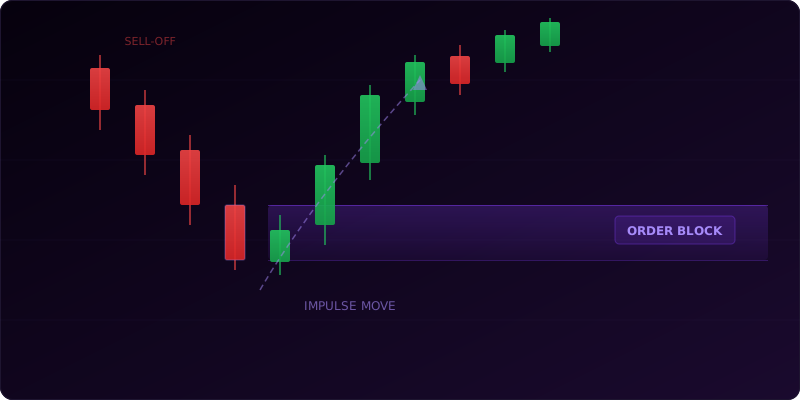
An order block is the last opposing candle before a significant price move. It marks where institutions accumulated positions. When price returns to this zone, it often reacts.
- Bullish OB: Last bearish candle before an up move → expect support on return
- Bearish OB: Last bullish candle before a down move → expect resistance on return
What Is a Breaker Block?
A breaker block forms when price sweeps liquidity past a previous extreme and then reverses through an order block, invalidating it. The failed OB flips direction and serves as a zone for the opposite side.
Here's the sequence:
- A bullish order block forms (institutions appear to be buying)
- Price rallies from the OB (confirming it initially)
- Price sweeps above a previous swing high, taking buy-side liquidity
- Price reverses and breaks back through the bullish order block zone, closing below it
- The original bullish OB is now invalidated - the liquidity sweep preceded the reversal, suggesting a shift in positioning
- The zone flips - what was support becomes resistance
- This flipped zone is the bearish breaker block
The same logic applies in reverse for bullish breaker blocks. The key difference from a simple invalidated order block is the liquidity sweep — price must take out a previous extreme before reversing. Without the sweep, the failed OB would be a mitigation block (failure swing), not a breaker.
Why Are Breaker Blocks Powerful?
They Confirm Institutional Shift
When an order block fails, it means the institutions that were positioned there got overrun by stronger opposing flow. This is significant information:
- The original institutional intent has been negated
- New, stronger institutions have taken control
- The zone now works in the opposite direction
This is a confirmed shift in positioning, not just a speculation about where orders might be.
They Trap Traders
Traders who entered at the original order block are now trapped in losing positions. When price returns to the breaker block zone:
- Trapped longs (from the original bullish OB) are looking to exit at break-even
- Their sell orders (exiting longs) add to the selling pressure
- New sellers also enter at the zone, recognizing the failed OB
- The combined pressure makes the zone even more effective as resistance
They Show Failed Institutional Levels
Not every institution gets it right. When an order block breaks, it means that group of institutional traders was wrong - or was deliberately providing liquidity for an even larger participant. Either way, the zone has changed character.
What Does a Breaker Block Formation Look Like?
Bullish Breaker Block:
- Price is in a downtrend with a series of lower lows
- A bearish order block forms (last bullish candle before a drop)
- Price drops and sweeps below a previous swing low (takes sell-side liquidity)
- Price reverses and closes above the bearish OB — the zone is invalidated
- The zone flips to become a bullish breaker block
- When price pulls back to this zone, it acts as support
Bearish Breaker Block:
- Price is in an uptrend with a series of higher highs
- A bullish order block forms (last bearish candle before a rally)
- Price rallies and sweeps above a previous swing high (takes buy-side liquidity)
- Price reverses and closes below the bullish OB — the zone is invalidated
- The zone flips to become a bearish breaker block
- When price rallies back to this zone, it acts as resistance
GrandAlgo
See these concepts automated on your charts
18 TradingView indicators — smart money, price action, supply/demand, and more.
How Do Order Blocks and Breaker Blocks Compare?
| Aspect | Order Block | Breaker Block |
|---|---|---|
| How it forms | Last opposing candle before impulse | Failed order block that flips |
| Direction | Same as original intent | Opposite to original intent |
| What it shows | Institutional accumulation | Institutional shift / trap |
| Probability | High on first test | Often higher (confirmed shift) |
| Trapped traders | None | Yes (adds to effectiveness) |
| Requires | Structure break + impulse | Order block failure + close through |
How to Trade Breaker Blocks
Identification
- Mark order blocks as they form (last opposing candle at structure breaks) - tools like Institutional Price Blocks can automate this
- When an order block gets broken and closed through, mark it as a breaker
- Change its expected direction - what was bullish becomes bearish and vice versa
Entry
- Wait for price to return to the breaker block zone
- Look for confirmation - reversal candle, FVG, or lower TF structure shift
- Enter in the new direction (opposite to the original OB direction)
Risk Management
- Stop-loss: Beyond the breaker block zone - if price closes back through in the original OB direction, the breaker has failed
- Take-profit: Next structural level, next liquidity target, or next order block in the same direction
- Risk-reward: Typically generous because you're entering at a confirmed shift zone
When Do Breaker Blocks Fail?
Breaker blocks aren't infallible:
- In strong trends, price can slice through breaker blocks without reacting
- Old breaker blocks lose relevance as market context changes
- Multiple retests weaken the zone - the first retest is highest probability
- Without higher TF alignment, a breaker on a small timeframe fighting the larger trend will likely fail
How Do You Combine Breaker Blocks With Other Concepts?
+ Fair Value Gaps
If an FVG sits within or near the breaker block zone, you have strong confluence. The gap provides precise entry placement; the breaker provides directional context.
+ Market Structure
The best breaker block trades occur when the break through the original OB also constitutes a Change of Character - confirming the structural reversal alongside the market structure shift.
+ Premium/Discount
A bearish breaker block (resistance) in the premium zone of the current range is higher probability than one in the discount zone. Match breaker direction with pricing context.
Frequently Asked Questions
An order block is a supply or demand zone that supports the current structure. A breaker block is a failed order block that price breaks through, then later retests from the opposite side. The failure is what creates the role reversal.
Breaker blocks trap traders who expected the original order block to hold. When price breaks through and retests the zone, those trapped positions often exit or reverse, adding order flow in the new direction.
Wait for the original order block to fail with displacement, mark the failed zone, then watch for price to retest it from the opposite side. The best entries use confirmation such as structure shift, FVG confluence, or rejection candles at the retest.
Not always. Breaker blocks can be more powerful after a clear structural failure, but order blocks are still useful when the trend is intact. The better choice depends on whether price is continuing structure or reversing through a failed zone.
Breaker blocks fail when the original break lacked displacement, the retest occurs in weak context, or higher-timeframe structure disagrees. If price accepts back inside the failed zone instead of rejecting, the breaker idea is no longer clean.
Key Takeaways
- A breaker block is a failed order block that flips direction
- They form when price breaks through and closes beyond an existing order block
- Breaker blocks are often higher probability than regular order blocks because they represent a confirmed institutional shift
- Trapped traders from the original OB add to the breaker block's effectiveness
- Trade breaker blocks in the opposite direction to the original order block
- Combine with FVGs and structural confirmation for best results
- First retest is the highest probability - effectiveness decreases with each test


